
The Bank of Ghana (BoG) has directed commercial banks to stop making foreign currency cash payments to large corporates unless such withdrawals are backed by equivalent deposits. The directive, announced on August 20, 2025, is aimed at curbing speculative demand, preserving reserves, and stabilising the cedi.
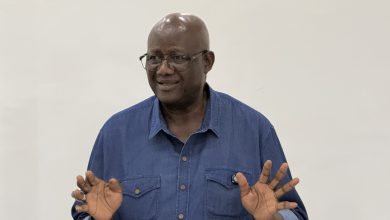
In an analysis of the policy, Head of the Economics Department of the Kwame Nkrumah University of Science and Technology (KNUST), Professor E. F. Oteng-Abayie, PhD, described the directive as “a supplementary tool to reinforce policy goals and stabilise reserves” at a time when the local currency has come under renewed pressure.
Earlier this year, Ghana posted a US$5.6 billion trade surplus and a US$3.4 billion current account surplus, helping the cedi appreciate by more than 40 percent between February and June. But by late August, heavy corporate demand caused the currency to slip from GH₵10.70 to GH₵11.03 per dollar in just a week, forcing the central bank to intervene.
Professor Oteng-Abayie argued that the directive is necessary to restore order in the FX market but cautioned that it cannot substitute for broader reforms. “FX controls may stabilise the economy briefly, but without structural transformation, they cannot be sustained,” he wrote, pointing to similar short-lived measures in 2014 and the 1980s.
Industry groups have expressed support for the central bank’s stance. The Chamber of Bulk Oil Distributors praised the BoG’s decision, pledging compliance and advising members against practices that could destabilise the market. Analysts say such alignment between the central bank and priority sectors could enhance the policy’s effectiveness.
However, Professor Oteng-Abayie warned of potential disruptions for businesses that rely heavily on cash-based access to foreign currency. “Supply chain disruptions could arise for firms requiring large volumes of FX on short notice,” he noted, adding that sectors such as pharmaceuticals, consumer electronics, and auto parts remain particularly vulnerable.
For him, the directive’s true test lies in whether Ghana uses the window it creates to rebuild its economic fundamentals. “We must use this moment not only to defend the cedi, but to restructure the economy,” he wrote. “Ghana needs a national blueprint—not just to stabilise the currency, but to ensure long-term prosperity through self-sufficiency, productivity, and innovation.”
Read below the full analysis on the policy by Professor Oteng-Abayie
Ghana_FX_Directive_Commentary_EF_Oteng_Abayie_Updated_2000Words