By: Evans Osei-Bonsu
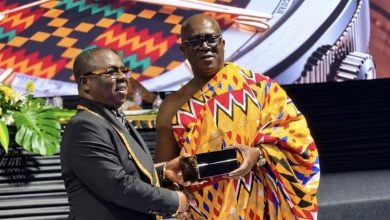
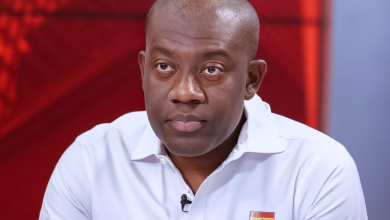
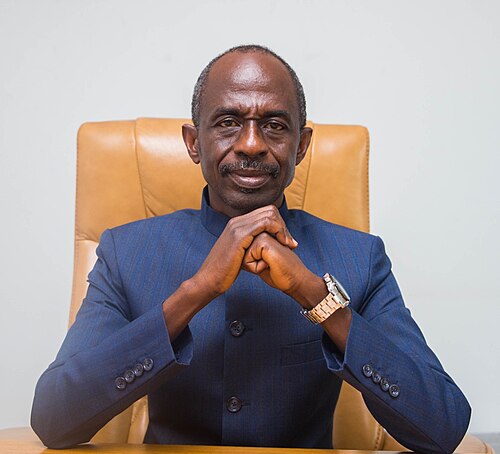
National Chairman of the National Democratic Congress (NDC), Johnson Asiedu Nketia , and Minister for Food and Agriculture Eric Opoku have emerged as the leading names in a new survey assessing potential contenders for the party’s next flagbearer.
The survey conducted by Professor Smart Asomaning Sarpong, a Data Management Consultant, and also the Director of the Institute of Research, Innovation and Development (IRID) at Kumasi Technical University is titled “The Political Environment Assessment Survey Report”.
The survey is dated September 18, 2026, and was conducted between September 10 and 20, 2026 across 11 randomly selected regions, 136 randomly selected constituencies and 350 communities.
The exercise had a total sample size of 9,330 respondents, comprising 5,580 stakeholders and 3,750 NDC delegates.
Prof. Smart Sarpong based the flagbearer assessment on the responses of the 3,750 delegates as recorded in the survey report.
In identifying the responses from the delegates, Prof. Smart Sarpong asked the question of who they considered the “most unifier”. The survey puts Chairman Asiedu Nketia at 24.5%, followed by Asunafo South MP and Agric Minister, Eric Opoku at 20.4%.
Some 16.3% of delegates said they did not know and declined to disclose their preference, while Finance Minister and Ajumako-Enyan-Esiam MP Dr. Cassiel Ato Forson recorded 12.5%.
Education Minister Haruna Iddrisu followed with 9.4%, Chief of Staff Julius Debrah with 6.1%, Vice President Professor Jane Naana Opoku-Agyemang with 5.2%, and Professor Joshua Alabi with 3.6%. Other candidates accounted for 2%. Smart Sarpong.
The report also tested delegates’ views on who was “most suitable” to lead the NDC, with Asiedu Nketia again recording the highest percentage.
The NDC Chairman polled 27.6%, just ahead of Eric Opoku with 26.4%. Dr Ato Forson obtained 16.1%, followed by Haruna Iddrisu with 10.4%.
Professor Jane Naana Opoku-Agyemang recorded 5.2%, Professor Joshua Alabi 4.4%, and Julius Debrah 4.1%. A further 5.3% of delegates were undecided and did not disclose their preference, while other candidates accounted for 0.5%.
The survey’s assessment of the candidates’ momentum also uses distinct descriptions, stating that “some are rising”, with Eric Opoku identified in that category, while “some are peaking”, with Asiedu Nketia identified as the candidate in that category.
The report says delegates are uncertain about some potential aspirants, specifically Professor Jane Naana Opoku-Agyemang, Dr Ato Forson and Professor Joshua Alabi. It further categorises Haruna Iddrisu and Julius Debrah as “declining driven by extreme uncertainty.”
The survey did not state a formal margin of error in the presentation. However,Pure FM’s data analyst using the conventional 95% confidence-level calculation for the simple random sample, the 3,750-delegate sample corresponded to an approximate margin of error of ±1.6% points, while the full sample of 9,330 corresponded to approximately ±1.0% point.
The wider research also examined the political environment, constituency needs, MMDCE performance and voter economic sentiment.
The survey found that unemployment and lack of job opportunities featured prominently among constituency concerns, while the economic sentiment component assessed how respondents viewed their economic circumstances over the preceding 12 months.
Professor Smart Sarpong has previously demonstrated experience in large-scale election research, including his 2020 elections nationwide survey which accurately projected the outcome of that year’s general election.
The latest assessment offers a snapshot of perceptions among NDC delegates and stakeholders as the conversation around the party’s future leadership begins to take shape ahead of its internal party primaries.
Source: Purefmonlinegh.com || Evans Osei-Bonsu || 2026