
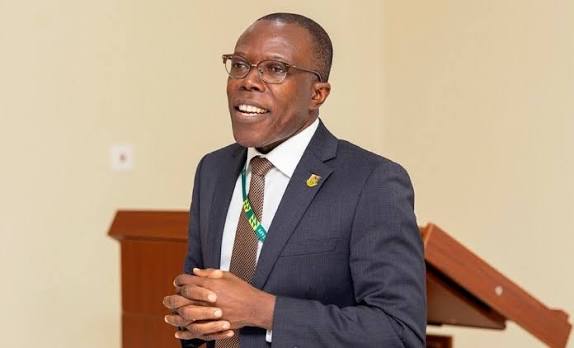
The Kwame Nkrumah University of Science and Technology (KNUST) is playing a leading scientific role in a new €11 million international initiative aimed at advancing the licensure of a promising dengue vaccine for use across sub-Saharan Africa.
The project, known as the Dengue Efficacy and Safety Trial in the African Region (DENSTAR), brings together 10 institutions from nine countries across Africa, Europe, Asia and North America to support the approval and deployment of DengiAll, a tetravalent live-attenuated dengue vaccine currently in late-stage development.
The four-year project, which commenced on June 1, 2026, is funded under the Global Health European & Developing Countries Clinical Trials Partnership 3 Joint Undertaking (GH EDCTP3 JU) with support from the European Union.
KNUST’s Professor of Epidemiology and Global Health, Prof. Ellis Owusu-Dabo, who serves as Scientific Project Lead for DENSTAR, says the initiative comes at a critical time as dengue infections continue to rise across Africa.
“Dengue infections can range from mild to potentially fatal in the most severe cases. It is becoming more common in sub-Saharan Africa, driven primarily by climate change,” Prof. Owusu-Dabo said.
He explained that the project seeks to generate the scientific evidence needed to secure regulatory approval for the vaccine across the continent.
“The primary challenge of the DENSTAR project is to advance a live-attenuated tetravalent dengue vaccine through immunobridging and controlled human infection model studies to enable its licensure in sub-Saharan Africa, where dengue infections have become more common,” he stated.
According to the consortium, dengue fever has emerged as one of the world’s fastest-growing mosquito-borne diseases. While outbreaks are increasingly being reported in Africa, experts say the continent’s true disease burden remains largely underestimated.
Severe dengue can lead to shock, bleeding and organ failure, yet there is currently no specific antiviral treatment available. Existing prevention efforts rely heavily on mosquito control, which is being complicated by climate change, rapid urbanisation and growing insecticide resistance.
Under the DENSTAR project, researchers will conduct Phase I- III clinical studies involving healthy African adults and children to establish the vaccine’s safety and effectiveness within African populations.
The consortium will also evaluate vaccine efficacy against Dengue Virus Serotype 4 (DENV-4) using Controlled Human Infection Models, an area where no dengue vaccine has yet demonstrated protection.
The project is coordinated by the Sclavo Vaccines Association (SVA), a non-profit vaccine research organisation based in Siena, Italy.
Speaking on the significance of the initiative, DENSTAR Coordinator and Chief Scientific Officer of SVA, Prof. Donata Medaglini, described the consortium as a unique global partnership bringing together expertise in vaccine research, manufacturing and clinical trials.
“DENSTAR is a unique consortium that concentrates international excellence in vaccine research, development, manufacture, and clinical trials. By uniting top experts from academia, industry, and non-profit organisations, we are forging a true public-private partnership to bridge critical gaps in dengue prevention,” she said.
Prof. Medaglini expressed optimism about the project’s prospects.
“By making a dengue vaccine available in Africa, we will uphold the universal right of every individual to a healthy and productive life. We have high hopes to advance the licensure of DengiAll in sub-Saharan Africa and beyond,” she added.
A key partner in the project is Panacea Biotec Limited of India, developer of the DengiAll vaccine. The vaccine targets all four dengue virus serotypes and offers several advantages for large-scale deployment, particularly in low- and middle-income countries.
Unlike some existing dengue vaccines, DengiAll is designed as a single-dose vaccine, does not require prior serological testing before administration, and can be manufactured cost-effectively, making it suitable for broad immunisation programmes.
Chief Scientific Officer of Panacea Biotec, Dr. Khalid Ali Syed, said the benefits of the project are expected to extend well beyond the life of the programme.
“The project efforts are expected to have a lasting impact on global health, extending beyond the project’s immediate scope and duration by reducing the dengue burden, improving quality of life, alleviating pressure on health systems, and upholding the universal right to a healthy, productive life,” he said.
Beyond vaccine development, the project also seeks to strengthen Africa’s capacity to conduct world-class clinical research.
According to Prof. Till Bärnighausen of the Heidelberg Institute for Global Health and Dr. Florian Marks of the International Vaccine Institute, DENSTAR will support postgraduate training opportunities while improving the readiness of African research sites to undertake high-quality clinical trials.
“A key strength of DENSTAR is its commitment to sustainable capacity advancement alongside vaccine development,” they said.
The two researchers noted that by working closely with participating institutions, the project would help build locally-led research capacity that would continue long after the initiative ends.
Source: Purefmonlinegh.com || Evans Osei-Bonsu || 2026