A New Parliamentary Era: NDC’s Two-Third Majority and the Future of Ghana’s Legislative Balance

By Adwoa Nyarko Asiamah | July 23, 2025
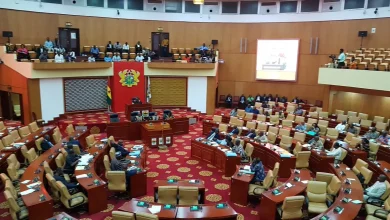
In a historic development, the National Democratic Congress (NDC) now holds a two-thirds majority in Ghana’s Parliament — the first time this has occurred since the beginning of the Fourth Republic. This shift grants the NDC unprecedented legislative power, enabling it to not only pass ordinary laws with ease but also to amend crucial provisions of the 1992 Constitution without requiring support from the opposition. It marks a turning point in Ghana’s democratic evolution, with serious implications for governance, opposition politics, and the constitutional order.
With this supermajority, the NDC can single-handedly push through amendments to several constitutional provisions, particularly those that fall under Article 291 of the Constitution. Matters related to the structure and functioning of institutions such as Parliament, the Judiciary, and the Council of State can now be reshaped at the will of the Majority. It also empowers the NDC to approve presidential appointments and key decisions concerning public offices, international treaties, and financial agreements without any input from the Minority.
Control of the parliamentary agenda now rests firmly in the hands of the NDC. Through its leadership in the Business Committee and other parliamentary organs, the Majority can dictate the flow and timing of legislation, restructure committees, and determine the pace of national policy direction. The new balance significantly reduces the role of the Minority, who can no longer block bills, delay proceedings, or exert influence over the legislative process through numbers.
This shift renders the Minority almost irrelevant in numerical terms. Without the constitutional leverage to stop or modify legislative actions, they must now pivot to alternative strategies. These include engaging with civil society organizations, collaborating with the media to shape public discourse, challenging unconstitutional laws in the courts, and directly engaging citizens to build grassroots resistance to unpopular policies. The Minority’s effectiveness will now depend less on what it can do inside Parliament, and more on how it can influence public opinion and legal processes from the outside.
Ghana’s democracy faces both opportunity and risk in this new environment. The NDC’s overwhelming majority gives it the mandate and capacity to reform outdated laws, strengthen institutions, and correct longstanding inefficiencies in governance. However, it also opens the door to potential overreach — the temptation to centralize power, sideline dissent, and weaken the very systems of accountability that protect citizens’ rights. Without a strong opposition, the responsibility of democratic oversight increasingly shifts to civil society, the media, academia, and ultimately the electorate.
At this crucial juncture, the question is not whether the NDC can “reset” Ghana, but how it chooses to do so. Will it use its power to deepen democracy, promote transparency, and ensure inclusive governance? Or will it seek to entrench itself politically at the expense of pluralism? The choices made in the coming months will define Ghana’s political direction for years to come.
This moment demands maturity, restraint, and vision from both sides of the aisle. The Majority must understand that its power comes with immense responsibility, and the Minority must reinvent itself to remain an effective voice for millions of Ghanaians who deserve representation, even in the face of legislative dominance. Ghana’s democracy must remain rooted not in numbers, but in principles — fairness, inclusion, accountability, and respect for constitutional limits.
As the country enters this new parliamentary era, one truth stands firm: while majorities may govern, it is how they govern that determines the strength and future of our democracy.