AUTHOR: MURPHY OPOKU APPIAH
INTRODUCTION
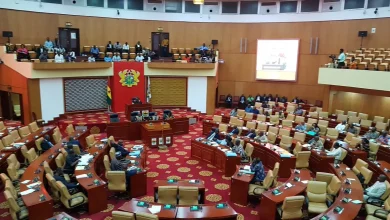
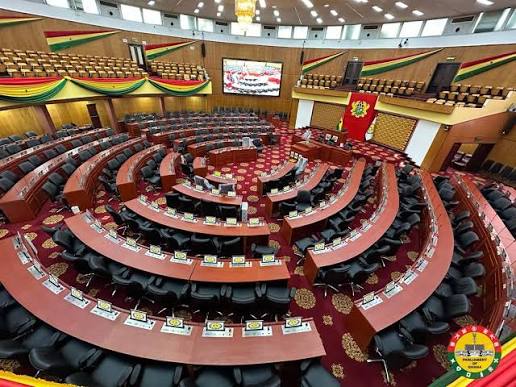
The Parliament of Ghana exercises functions that extend beyond legislation. Under the 1992 Constitution of Ghana, Parliament performs certain critical oversight functions designed to ensure that the executive and judiciary act in accordance with the law. A significant dimension of this oversight is Parliament’s power to approve or reject presidential nominees to key political and judicial offices.
This constitutional mechanism serves as an important check on executive power, ensuring that persons appointed to high offices meet the standards set by law. Nonetheless, concerns persist about whether the existing legal framework adequately supports Parliament in discharging its role of conferring approval on presidential nominees effectively. This article shall examine this role in its entirety, identify challenges in the current legal framework, and offer practical solutions.
Parliamentary Oversight
In Ghana, Parliament exercises enormous oversight on the executive arm. Through debates, resolution to remove the President, parliamentary hearings, budget oversight, vote of censure on a minister of state amongst others, parliament exerts its power to ensure that government remains compliant with laws made.
Parliament is also mandated under the 1992 Constitution to grant approval or reject persons nominated by the President to offices including minister of state, deputy minister, chief justice, and Justice of the Supreme Court. Although no specific procedure is laid out in the constitution for conferring approval on nominees, the Supreme Court in the case of J.H. Mensah v. Attorney General held that while Parliament must grant its approval, the specific method or procedure used to reach that decision is an internal matter for the legislature.
The aftermath of this ruling has seen a deliberate incorporation of a precise procedure for parliamentary approval of public appointments. The Appointments Committee of Parliament has been empowered to consider nominees and recommend them for approval or otherwise by vote or consensus.
Current Procedure for Conferring Parliamentary Approval on Presidential Appointees
Under Article 110 of the 1992 Constitution, Parliament has the autonomy to regulate its own proceedings through standing orders. The New Standing Orders of Parliament assigns the Appointments Committee of Parliament with the responsibility of considering persons nominated by the President. The Appointments Committee comprises of a Chairperson, Ranking Member, and senior parliamentary leadership alongside two members from the relevant subject matter committee.
The first procedure outlined in the Standing Orders is public engagement and empanelment. The names of persons nominated by the President is published in national newspapers to inform the public of the pending consideration, request memoranda, and accept representation from the general public.
Consideration is the next procedure. Members of the Appointments Committee participate in the process of considering the persons nominated by the President. There is no concise definition of what constitutes consideration although long standing practice has indicated that parliament reverts to vetting nominees and airs same on national television.
Within three days after the consideration of a nominee, the Appointments Committee shall recommend to parliament the rejection or otherwise of the said nominee. The recommendation for approval or otherwise shall either be by vote or consensus.
Analysis of the Current Procedure
The process of parliamentary approval for public appointees serves as a vital mechanism for maintaining a system of checks and balances between the executive and the legislature. Obviously, this requirement prevents the president from having unchallenged power over the process of appointment and the subsequent running of the state. The general public is also permitted to participate in this process by submitting memoranda and petitions, ensuring that persons nominated are adequately scrutinized. This process also reinforces the legitimacy of the government and its officials. Through a bipartisan review of appointees by parliament, a confirmation of an appointee conveys a national approval.
Some shortfalls are however immanent in the current regime.
First, the Appointments Committee is given a maximum of three days within which to report to parliament on whether an appointee should be approved or rejected. This denotes an assumption that the consideration process will ultimately lead to the approval of a nominee and therefore, much weigh, and depth should not be assigned to it. A three days window to present a report on persons designated to hold high offices such as Chief Justice, Minister of State or Justice of the Supreme Court is highly inadequate.
Another shortfall is that the rules do not provide for exceptional circumstances such as a hang parliament where parliament is unable to build consensus or call for a vote to approve or reject a nominee. In such situations, the fate of the nominee will be unknown.
There is also the critical issue of familiarity and perceived nepotism that may cloud this process. This is heavily attributed to the constitutional requirement under Article 78 that majority of ministers must be appointed from amongst members of parliament. This creates the problem of Parliamentarians vetting Parliamentarians. It may appear that the vigor, diligence and objectivity required to thoroughly scrutinize appointees will be lost. Friends may be more lenient or project a false sense of aggression. Opposition may be too voracious, and neutrals may be inclined to do the bidding of their caucus.
Importantly, there is also inadequate time to probe and investigate nominees. There is a heavy reliance on information submitted by the general public rather than commissioned investigations into the conduct, character and suitability for office of nominees.
Recommendations
To maximize probity and accountability, the parliamentary approval process must be refined through exhaustive scrutiny and structural reform, ensuring that parliament’s consent is not granted blindly but is instead the result of a rigorous evaluation of every nominee’s fitness for office. The following measures are recommended for implementation.
First, the three-day period within which the Appointments Committee must report to parliament for the approval or rejection of nominees should be extended to fourteen days. This would give the Appointments Committee enough time to assess the suitability of a nominee for a specified office. The committee would be able to corroborate information, verify sources and furnish parliament with a concise and elaborate report that will justify the rejection or approval proposed.
There is also the question of what happens to a nominee if parliament is unable to confirm his or her status. These situations may arise in parliaments with many factions divided along party lines. Where there is no clear majority in parliament, opposing factions may disrupt parliament business by walking out of parliament or protesting. In such circumstances, a vote to confer parliamentary approval on a nominee will be impossible.
Therefore, anticipatory rules must be made to cure this mischief. It is recommended that a nominee should be deemed to have been duly approved by parliament 21 days after Consideration. This will bring opposition factions to the table and ensure that a vote is cast or consensus is built to secure the rejection or approval of a nominee.
Furthermore, it is critical to ensure that the all-important role of oversight played by parliament is exercised without fear or favor. Decoupling parliament from the executive will embolden and strengthen parliament to scrutinize nominees with little lobbying and interference from the executive. This will ultimately establish an independent enquiry system which is much needed to provide Ghanaians with suitable appointees to lead these vital offices. This is in line with the recommendation made in the Constitutional Review Committee Report on Article 78.
Finally, it is suggested that investigative institutions such as the Bureau of National Investigation (BNI), and Economic and Organized Crime Office (EOCO) should be empowered and assigned to conduct thorough investigations into persons nominated for office and furnish same to parliament. This will provide parliament with adequate information into the background of appointees and assist parliament in the performance of their duty.
CONCLUSION
To promote good governance and enhance legislative oversight, the current framework for parliamentary approval should be strengthened through reforms such as decoupling the executive branch of government from the legislature, empowering investigative bodies and assigning them to conduct thorough investigations into persons nominated for office, extending reporting timelines, and establishing clear rules for stalled nominations.
Taken together, these reforms will not merely fine-tune the existing legal procedure for granting parliamentary approval but will restore the checks and balances that effective oversight depends on.