
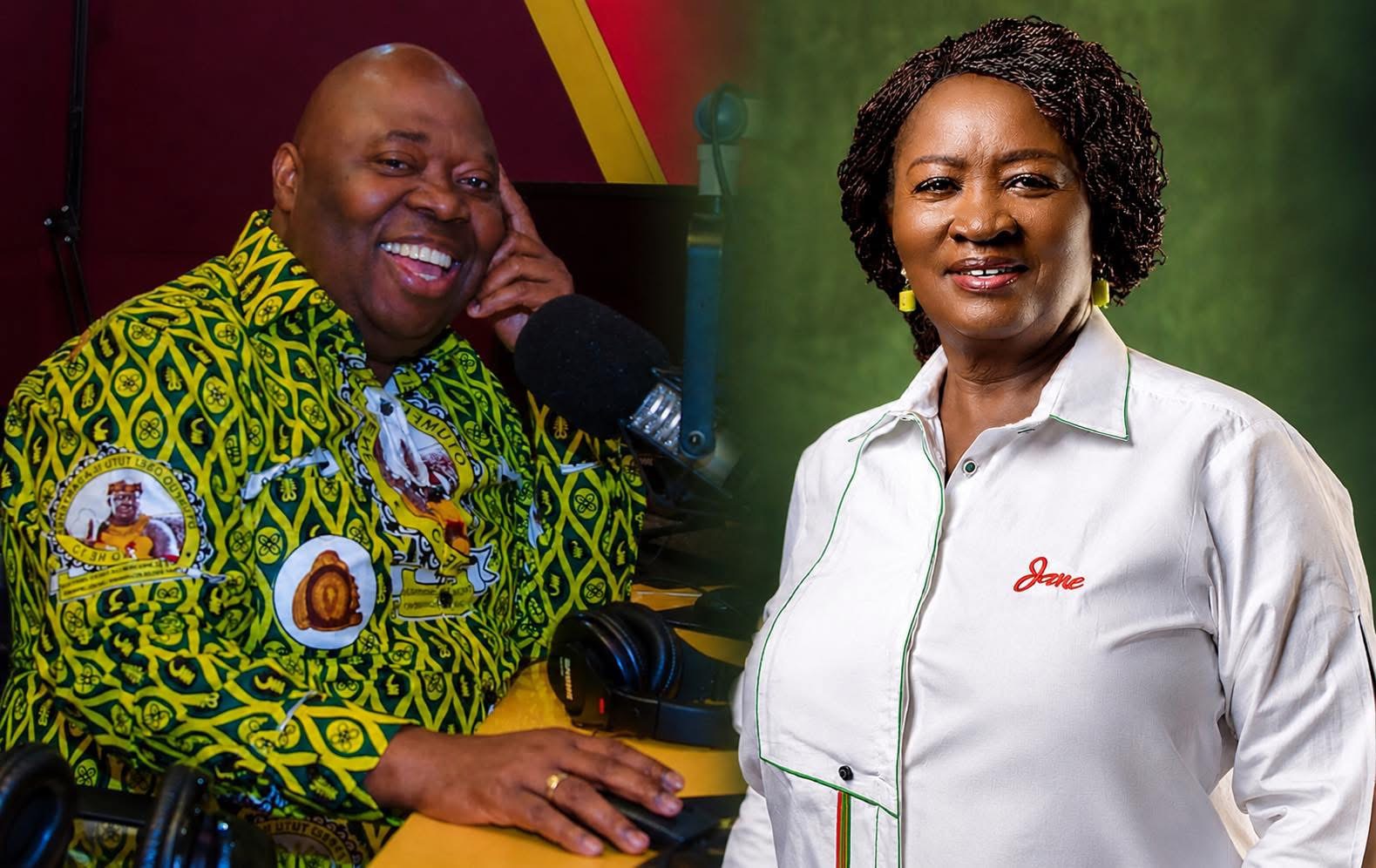
Multiple award-winning broadcaster, Dr. Kwame Adinkrah, has mounted a strong intellectual and political case for women path in securing Ghana’s top job as President.
In urging Vice President Jane Naana Opoku-Agyemang to contest the upcoming presidential primaries of the National Democratic Congress (NDC), Dr. Adinkrah described the moment as both “symbolic and generational” for Ghana and Africa if that decision is taking.
These sentiments he shared in a thought-provoking article titled “Breaking the Final Barrier.” Dr. Adinkrah argues that while Prof. Opoku-Agyemang’s ascent to the vice presidency marks a historic milestone, the true test of progress lies in what follows. “History is shaped not only by milestones achieved but also by the choices that follow them,” he writes, framing her potential candidacy as a defining moment in Ghana’s democratic journey.
According to him, her participation in the NDC primaries “regardless of the outcome” – would represent a transformative step for women’s political advancement. Conversely, her absence, unless due to compelling personal reasons, “risks reinforcing the notion of a ‘glass ceiling’ in Ghanaian politics.”
Dr. Adinkrah highlights the Vice President’s distinguished career, noting her trailblazing role as the first female Vice-Chancellor of the University of Cape Coast and her impactful tenure as Minister for Education. He emphasizes that her leadership goes beyond symbolism, aligning with political theorist Drude Dahlerup’s view that “it is not the number of women that matters most, but the presence of women who act to change the system.”
Drawing continental parallels, he references former Liberian President Ellen Johnson Sirleaf, quoting her assertion: “If your dreams do not scare you, they are not big enough.” He argues that, much like Sirleaf’s candidacy redefined possibilities for African women, Prof. Opoku-Agyemang’s bid could similarly reshape political expectations in Ghana.
The article revisits the concept of the “glass ceiling,” warning that failure by Ghana’s first female Vice President to pursue the presidency may signal an implicit limit to women’s political advancement. “It may reinforce the perception that women can rise, but only to a point,” he cautions, adding that such an outcome could dampen the aspirations of younger women and slow gender-inclusive reforms.
While acknowledging the efforts of past female presidential aspirants—including Nana Konadu Agyeman-Rawlings, Akua Donkor, Brigitte Dzogbenuku, and Nana Akosua Frimpomaa – Dr. Adinkrah notes that their bids, largely from smaller parties, have not fully disrupted the dominance of the NDC and NPP in presidential politics. This, he argues, makes a potential candidacy from within a major party even more consequential.
He further observes that the Vice President has yet to contest a direct national election, having risen through appointments and party selection processes. While this reflects confidence in her capabilities, he warns it may “inadvertently reinforce a troubling perception that women are more readily associated with appointed roles than with competitive electoral mandates.”
At its core, the argument is about legacy. “The decision before H.E. Jane Naana Opoku-Agyemang transcends personal political calculus. It is, fundamentally, a question of legacy,” he states, stressing that her participation would affirm that “the highest offices of the land are within reach for women.”
Still, Dr. Adinkrah concedes that leadership decisions may involve personal considerations, including health. However, he insists that “in the absence of such constraints, the weight of history and the promise of the future suggest that stepping forward is not merely an option but a responsibility.”
He concludes with a powerful reminder of the Vice President’s own words during her outdooring as running mate at the University of Professional Studies Accra in 2020: “Making history is gratifying, but what really matters is not to be the first through the door; what matters is to hold that door open for those behind us.”
“Your Excellency,” he urges, “please hold that door.”
Source: Purefmonlinegh.com || Evans Osei-Bonsu || 2026