
The Minority in Parliament has accused the Majority of attempting to shield Ghanaians from what it describes as the Bank of Ghana’s confirmation that the Domestic Gold Purchase Programme, introduced under the previous New Patriotic Party (NPP) administration, remains central to efforts to stabilize the cedi.
The controversy erupted after the Governor of the Bank of Ghana, Dr. Johnson Asiama, appeared before Parliament’s Committee of the Whole in a closed-door session on Thursday following a decision by the Majority Caucus. Journalists were asked to leave the public gallery before proceedings began, prompting a walkout by the Minority.
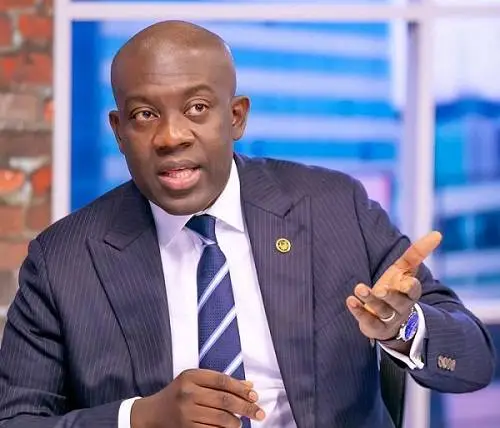
Addressing reporters after the walkout, Ranking Member on Parliament’s Economy and Development Committee and Member of Parliament for Ofoase-Ayirebi, Kojo Oppong Nkrumah, argued that the Governor’s written responses to parliamentary questions had already been published and contained no classified information that warranted secrecy.
According to Mr. Oppong Nkrumah, the Governor’s answers effectively amount to an admission that the Domestic Gold Purchase Programme—an initiative introduced during the Akufo-Addo administration and strongly associated with former Vice President Dr. Mahamudu Bawumia’s gold-backed economic strategy—has become the principal mechanism supporting foreign exchange supply and cedi stability.
“The Bank of Ghana is here to admit that its ability to intervene in the market is as a result of the Domestic Gold Purchase Programme. Why is it that the Majority is preventing the Governor from saying this to the entire country?” Mr. Oppong Nkrumah questioned.
The Governor’s written responses revealed that the Bank of Ghana has not undertaken direct foreign exchange interventions using the country’s official reserves since August 2024. Instead, the central bank has relied on foreign exchange generated through the Domestic Gold Purchase Programme to support market operations.
Dr. Asiama explained that under the framework, Ghana cedis raised through foreign exchange auctions are converted into foreign currency through gold purchases and subsequently channelled back into the market. According to the Governor, this arrangement has replaced foreign exchange flows that were previously supplied by independent gold exporters before the establishment of GoldBod’s centralized operations.
The Bank of Ghana further disclosed that between January 7 and December 31, 2025, it facilitated approximately US$10.36 billion in foreign exchange transactions through the programme. The Governor emphasized that these transactions were not financed from Ghana’s international reserves but were backed by foreign exchange generated through gold purchases.
For the Minority, the disclosure validates the effectiveness of the gold-backed policy framework championed by Dr. Bawumia while in office.
Mr. Oppong Nkrumah argued that the Governor’s own responses demonstrate that the current foreign exchange market framework depends significantly on the Domestic Gold Purchase Programme, making it one of the key factors behind the relative stability of the cedi in recent months.
He maintained that Ghanaians deserved to hear the Governor publicly explain the programme’s role in supporting the currency, particularly at a time when exchange rate stability remains a major national concern.
Beyond the foreign exchange issue, the Minority said it had intended to question the Governor on the Bank of Ghana’s audited financial statements, including concerns about reported operating losses and other accounting matters. However, it suspended its participation in the proceedings after the media were excluded.
The Minority insists that discussions involving the management of the economy, the cedi, inflation and the financial health of the central bank should be conducted openly in Parliament.
Majority Leader Mahama Ayariga, however, defended the decision to hold the meeting in camera, arguing that Parliament’s Standing Orders permit committees to determine whether their sittings should be held in public or private.
He rejected suggestions that the Governor was being protected from scrutiny and stated that Dr. Asiama had appeared before Parliament prepared to answer all questions submitted by Members of Parliament.
Despite the Majority’s defence, the Minority maintains that the Governor’s responses have already established a key point: that the Domestic Gold Purchase Programme, a policy rooted in the Bawumia-led gold-backed economic strategy, continues to play a significant role in Ghana’s foreign exchange management and the stability of the cedi.
Source: Purefmonlinegh.com || 2026 ||